
The short version
- A localized, clearly identified problem may be repairable when the surrounding roof remains serviceable.
- Widespread damage, repeated leaks, wet decking, or failing materials make replacement a more serious discussion.
- Ask the roofer to explain the evidence, written scope, permit path, and what remains uncertain before choosing.
One leak does not answer the whole question
If a ceiling stain appeared after rain, the first useful question is where water entered, not whether the whole roof must be replaced. A roofer may trace water around flashing, valleys, vents, a wall intersection, or a damaged section of covering. The indoor stain can be away from the actual entry point. Do not climb a wet or damaged roof to investigate; describe what you can see from the ground and inside the home.
An isolated issue on a roof with serviceable surrounding materials may support a repair discussion. That is only a starting possibility. Your roofer should explain what they inspected, which materials are affected, whether the source is controlled, and what evidence supports the proposed scope.
What is the roof showing?
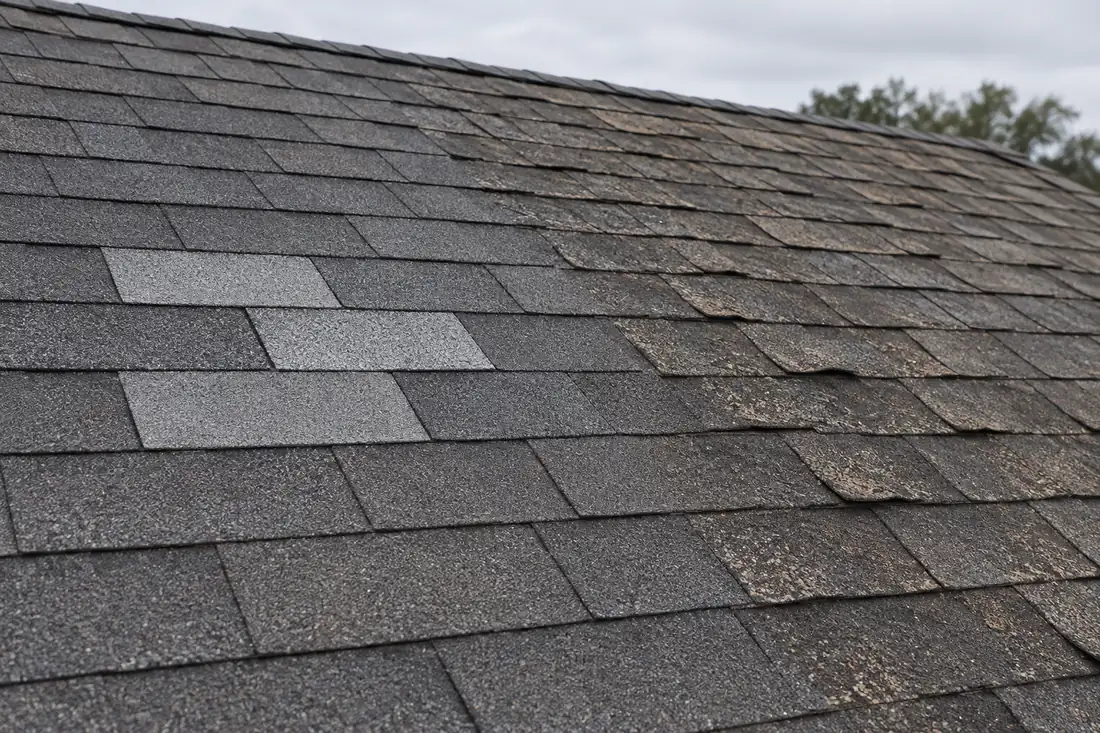
Look for patterns rather than trying to grade the roof yourself. Missing, lifted, cracked, curled, or granule-worn shingles can point to different questions. Rusted or displaced metal, open seams, loose flashing, clogged drainage, and damaged vent boots deserve attention. Several leaks in separate rooms can mean the problem is broader than the first visible stain.
Age is useful context but not a decision by itself. Installation quality, ventilation, shade, salt-laden air, storm exposure, maintenance, and prior repairs all affect how materials perform. A Gulf Coast roof may also deal with humidity, pine debris, algae streaks, and wind-driven rain. Do not pressure-wash asphalt shingles to remove streaks; ask your roofer what treatment is safe for the material.
When the decking or structure is wet
The outer covering is only one part of a roof. If water has reached the roof deck, insulation, rafters, ceiling, or wall cavity, the roofer may need to discuss controlled removal, drying, or additional inspection. Soft decking, sagging surfaces, or a ceiling that is changing shape can be safety concerns. Keep people away and do not create an opening just to see inside.
Ask whether the inspection included the suspected entry point, nearby flashing, penetrations, underlayment, decking, and the path to the interior stain. A written scope should distinguish what is visible, what is assumed, and what would change the work if hidden damage is found.
Storm damage and insurance are separate decisions
After tropical weather or a severe thunderstorm, photograph visible damage from the ground and keep the date and circumstances with the record. Missing shingles, lifted edges, punctures, fallen limbs, and water inside can be useful observations. Contact the insurer through its claim process if you think a covered event may be involved. The insurer decides coverage, exclusions, deductible, and payment.
A roofer can document roof condition and propose work, but should not promise that insurance will pay or negotiate a claim without the authority required for that role. Ask for a written scope and keep it separate from the policy decision. If the home is in a municipality, historic area, floodplain, or unincorporated county location, ask which building office handles the work.
What FORTIFIED changes—and what it does not
FORTIFIED is a resilience standard with documented elements and a verification process. IBHS says a homeowner needs a trained contractor and an independent evaluator; documentation is reviewed before a designation is issued. Ask the roofer whether they participate in the current program and ask the evaluator what must be documented. This guide does not promise a designation, grant, discount, or eligibility.
FORTIFIED questions can be part of a replacement discussion, but they do not replace an inspection of the existing roof. A home can need ordinary repair even when a resilience upgrade is not being considered. Keep the decision tied to the roof, the project, the current standard, and the official program information.
The middle option: one slope
Between a patch and a full roof sits replacing one damaged slope. It can make sense after wind damage on a single side of an otherwise sound roof, but it leaves an old roof beside a new one, and matching color and seal is hard. Local code can also decide it: Gulf Shores' 2024 amendments require the whole roof to meet the re-roof section once more than a quarter of the covering is replaced, unless the building official waives it. Ask the roofer how your city treats partial work before approving it.
If you may sell the home soon
Selling soon does not make the repair-or-replace decision simple. A patch may address an active source but leave a buyer, inspector, or insurer with questions about age and remaining condition. A replacement may address broader wear but requires a clear scope, permits where applicable, and records. Ask the roofer to describe observed condition and options without presenting an unsupported claim about resale value.
Keep invoices, photos, warranty documents, permit records, inspection notes, and the written scope together. A future owner or insurer may need to know what was repaired, which materials were used, and who performed the work. Keep in mind that no repair or replacement eliminates every future leak.
A short checklist before calling
- Write down the address, roof material if known, approximate age, last repair, and the first place you noticed water.
- Photograph the ceiling, attic-side stain, gutters, yard debris, and visible roof damage from safe locations.
- Note whether the issue followed rain, wind, a fallen limb, or no obvious weather event.
- Keep people away from unstable ceilings, exposed wiring, and wet roof surfaces.
- Ask your roofer what they will inspect, what the written scope includes, and which city or county permit office applies.
The right answer depends on evidence at the property. Use roof leak repair for a current leak and roof replacement when a wider condition discussion is needed.